
Authorized Trading Partners (ATP)
Partenaire commercial autorisé


.webp)


%201.webp)



%201.webp)




La sérialisation n'est pas une solution universelle. Avec des mandats variés aux États-Unis, dans l'UE, en Asie et au Moyen-Orient, les entreprises doivent faire face à un réseau complexe d'exigences. Êtes-vous prêt pour la conformité mondiale ?
.avif)
Si vous souhaitez faire la différence et vous épanouir dans un environnement collaboratif, LSpedia est l'endroit qu'il vous faut.

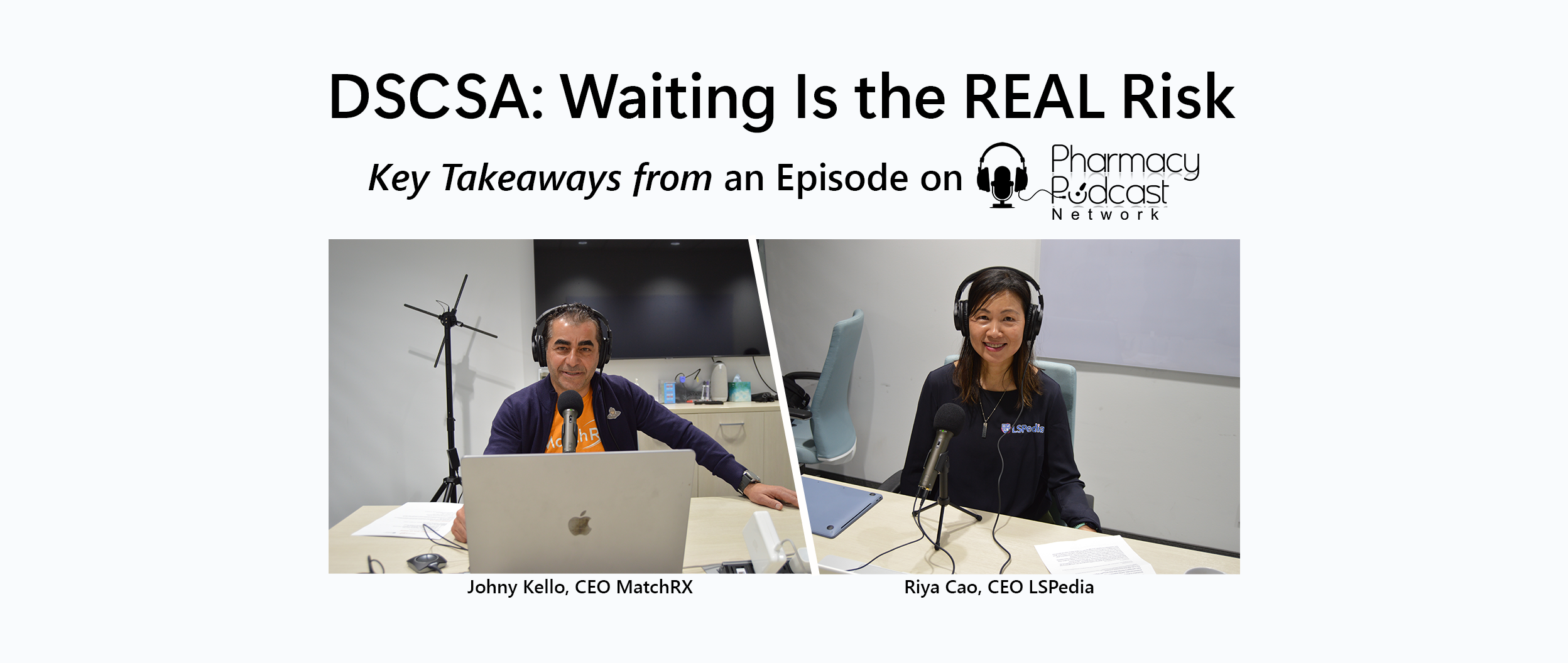
If you’re a small dispenser, an independent community pharmacy, a clinic, a medical spa, with 25 full time employees or less, DSCSA can feel like one more “big system” requirement being dropped on a small team.
In my podcast conversation with Johny Kello, CEO of MatchRX, we kept coming back to a simple reality:
This article is for the pharmacy owner, Pharmacist in Charge, lead tech, or operations manager who’s thinking: “We’ll figure it out later.”
👉 Listen to the full podcast on Spotify, PodBean, and Apple Podcasts.
DSCSA creates so much anxiety for small dispensers that it sounds like a technical transformation (and in many ways, it is). You’re hearing new terms, new requirements, and new workflows, often without clear guidance on what “good” looks like inside an everyday pharmacy.
In the Podcast, I talked about the core shift as moving from “paper and pencil” processes to digital traceability. Not just in theory, but in the real receiving workflow at your back door. Products are already arriving with 2D barcodes (they look like QR codes) that encode key details like NDC, lot, expiration, and a unique serial number.
If you’re already stretched thin, your first thought might be:
That fear is valid and it’s exactly why you need a plan now, not later.
A common misconception Johny called out is that DSCSA is something you worry about only when an inspector shows up. But in the podcast, the message was clear: compliance is becoming part of routine operations.
DSCSA expectations have been incorporated into state-level inspections and even broader accreditation expectations (e.g., NABP programs). And FDA involvement tends to be issue-driven—meaning if something goes wrong (suspect product, illegitimate product, a recall scenario), you don’t want to be discovering your compliance gap in the middle of the incident.
Here’s the real risk for small dispensers:
“Doing nothing is doing something.” Waiting creates exposure.
Another theme that came up is the idea that a pharmacy can wait until the last minute and simply “turn on” DSCSA.
In reality, DSCSA readiness isn’t a single button. It requires multiple connections and data exchanges across the partners you buy from:
Even if your main wholesaler offers a portal, how many portals can your team realistically manage without turning receiving into a full time job?
And if your backup plan is emails and PDF files, you might be able to do it for a day, but can you do it every day, 365 days a year, with a small staff?
The fear isn’t just “this sounds hard.” The fear is:
Those are exactly the scenarios technology is meant to protect you from.
There’s another layer to this conversation that small dispensers sometimes miss:
DSCSA isn’t only compliance, it’s a gateway to modernizing pharmacy operations.
In the podcast, I described Pharmacy Pro (built for dispensers) as browser-based, device-agnostic (computer, phone, iPad), and designed around a simple workflow: scan the 2D barcode.
Pharmacy Pro system can understand “parent-child” relationships, how individual items relate to a tote, and how totes relate to purchase orders, so receiving can become faster and more consistent.
And importantly, as serialization becomes embedded in pharmacy workflows, serial numbers can become required for more than traceability—returns, recalls, and potentially future insurance claims.
Whether every future requirement lands exactly as predicted or not, the direction is clear: the industry is moving toward serialized, digital operations.
If you wait too long, you risk being behind when your competitors are years ahead.
A small dispenser can absolutely meet DSCSA requirements, but not with the same “paper-first” workflow that worked in the past.
DSCSA is a new class of problem:
Trying to solve this with old tools (emails, disconnected portals, tribal knowledge) is how overwhelm becomes the default.
The goal isn’t “more software.” The goal is:
That’s why the podcast message was clear: get onboarded before the deadline pressure hits.
If you’re a small dispenser looking for a manageable path forward, get started with Pharmacy Pro, a purpose-built solution for dispensers.
Want to get going fast? Sorting out the practical list below will help your pharmacy pro onboarding a breeze.
Click here to download a simple DSCSA readiness checklist that you can use with your team. LSPedia and MatchRX team are here to help you every step of the way.
Need practical DSCSA guidance for your team? Explore our training resources to build confidence, strengthen workflows, and prepare your pharmacy for DSCSA compliance without disruption.


.png)

